
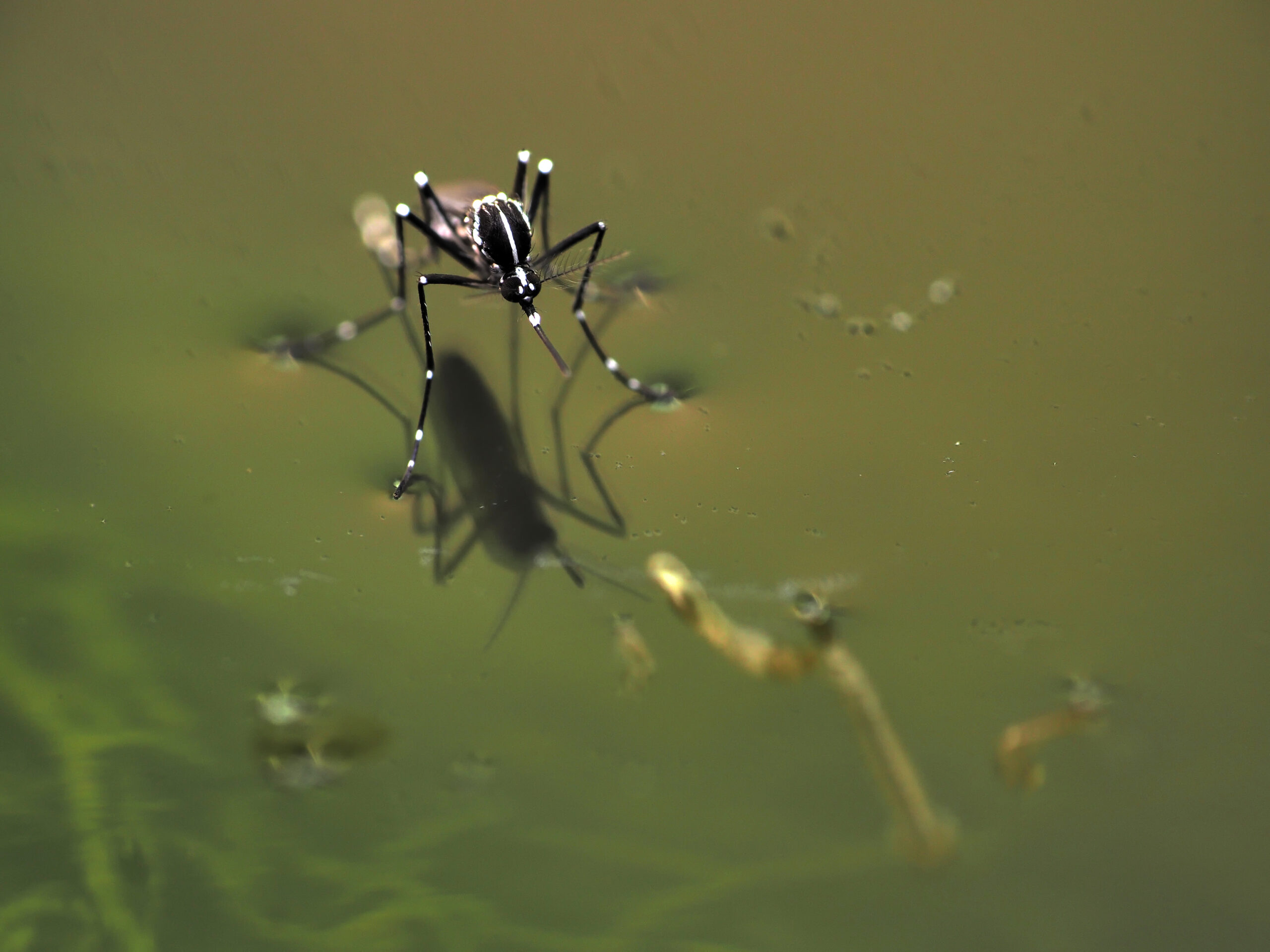
AN AEDES AEGYPTI MOSQUITO RESTS ON THE SURFACE OF STANDING WATER. SOUTH FLORIDA’S MOST COMMON MOSQUITO SPECIES BREEDS IN CONTAINERS RATHER THAN CANALS, LAYING EGGS ON THE INNER WALLS OF ANY VESSEL HOLDING WATER. THOSE EGGS CAN SURVIVE UP TO EIGHT MONTHS WITHOUT MOISTURE
South Florida’s warm, wet climate makes Miami-Dade County one of the most mosquito-prone regions in the country. Peak season runs from April through October, but the county has one of the nation’s most active mosquito control programs, and Pinecrest residents are a critical part of it.
Miami-Dade’s Mosquito Control and Habitat Management Division monitors, traps and treats mosquito populations countywide. The division deploys both aerial and ground applications to suppress breeding in public waterways and open spaces.
The Village coordinates with the county program and supports it through a separate canal maintenance contract with Aquatic Control Group. That contract covers debris removal and water quality management in Village-maintained canals. Together, these efforts reduce the stagnant, organic-rich conditions that allow mosquito populations to spike.
Even so, the most common South Florida species, Aedes aegypti, doesn’t breed in canals at all. It breeds in containers. A forgotten planter, a clogged gutter or a bucket left out after last week’s rain can produce dozens of adult mosquitoes in as little as eight to 10 days.
Female mosquitoes lay eggs on the inner walls of any vessel that holds water. Those eggs can survive up to eight months without moisture, then hatch within hours once submerged again.
That means residents hold significant power over local mosquito populations. Emptying containers, clearing gutters and storing items that collect rainwater can break the breeding cycle.
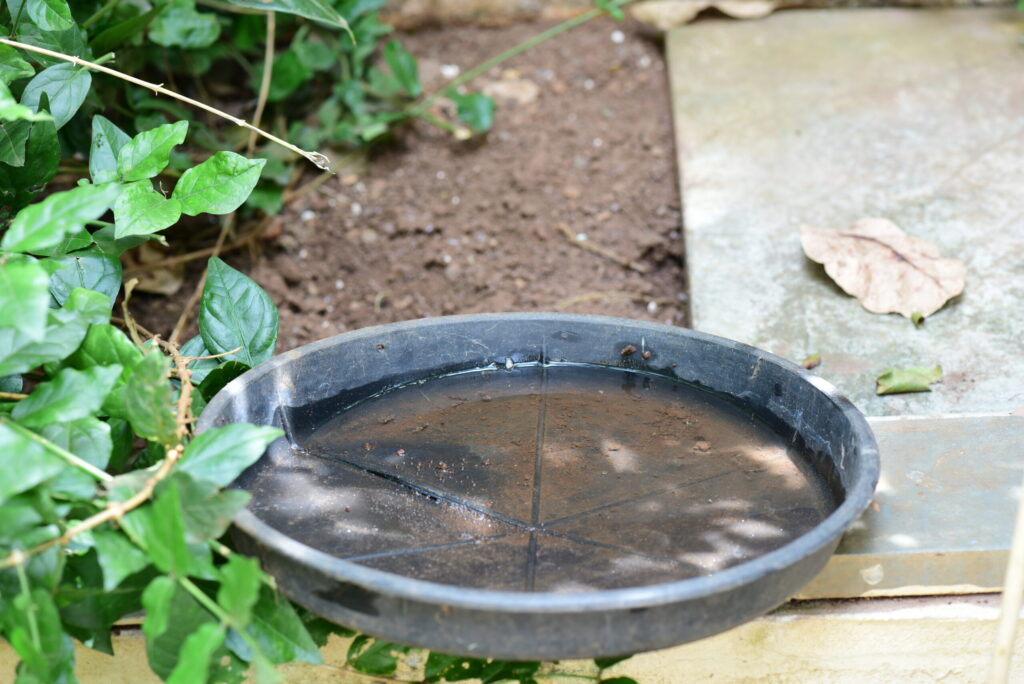
Here are four steps to mosquito-proof your yard
1. Empty water in birdbaths, pet dishes and planters weekly.
2. Clear gutters of debris so water drains freely.
3. Turn over or store containers that collect rain, including buckets, wheelbarrows and recycling bins.
4. Change water in ornamental ponds weekly or treat with a larvicide tablet, available at hardware stores.
Residents who spot standing water on public property, in drainage ditches or on neglected lots are encouraged to report it directly to Miami-Dade Mosquito Control at miamidade.gov/mosquito or by calling 311.
Love what you're reading?
Get the best of South Dade delivered to your inbox every month — local stories, events, and good news worth sharing.
Subscribe for Free